The Language of Adoption is a 100+ page adoptee-centered reference guide designed to support deeper understanding of adoption as a lived, lifelong experience.
This guide offers shared language and concepts that help make sense of identity development, emotional responses, and behaviors adoptees often experience before they have words for them — and that parents often witness without context. Each term is given space not only to be defined, but to be understood, with attention to why it matters and how it may show up over time.
This is not a guide meant to be read quickly or completed in one sitting. It is intentionally thorough and designed to be returned to as questions arise, children grow, and understanding deepens. The length reflects the complexity of adoption — and the care taken to avoid oversimplifying experiences that deserve nuance.
This resource is not a parenting manual, checklist, or diagnostic tool. It does not tell you what to do. Instead, it offers language and perspective to help you notice what may be happening beneath the surface and respond with greater clarity, compassion, and emotional safety.
You do not need to agree with every term or concept to benefit from this guide. You are invited to take what resonates, move at your own pace, and return to sections when the time feels right.
This guide is meant to capture a broad and meaningful range of adoptee-centered terms and concepts. It is not exhaustive, and it is not meant to capture every experience or perspective. Instead, it offers a carefully considered starting place — language to support understanding that can continue to expand over time.
Access details will be emailed after purchase.
The Language of Adoption is a 100+ page adoptee-centered reference guide designed to support deeper understanding of adoption as a lived, lifelong experience.
This guide offers shared language and concepts that help make sense of identity development, emotional responses, and behaviors adoptees often experience before they have words for them — and that parents often witness without context. Each term is given space not only to be defined, but to be understood, with attention to why it matters and how it may show up over time.
This is not a guide meant to be read quickly or completed in one sitting. It is intentionally thorough and designed to be returned to as questions arise, children grow, and understanding deepens. The length reflects the complexity of adoption — and the care taken to avoid oversimplifying experiences that deserve nuance.
This resource is not a parenting manual, checklist, or diagnostic tool. It does not tell you what to do. Instead, it offers language and perspective to help you notice what may be happening beneath the surface and respond with greater clarity, compassion, and emotional safety.
You do not need to agree with every term or concept to benefit from this guide. You are invited to take what resonates, move at your own pace, and return to sections when the time feels right.
This guide is meant to capture a broad and meaningful range of adoptee-centered terms and concepts. It is not exhaustive, and it is not meant to capture every experience or perspective. Instead, it offers a carefully considered starting place — language to support understanding that can continue to expand over time.
Access details will be emailed after purchase.

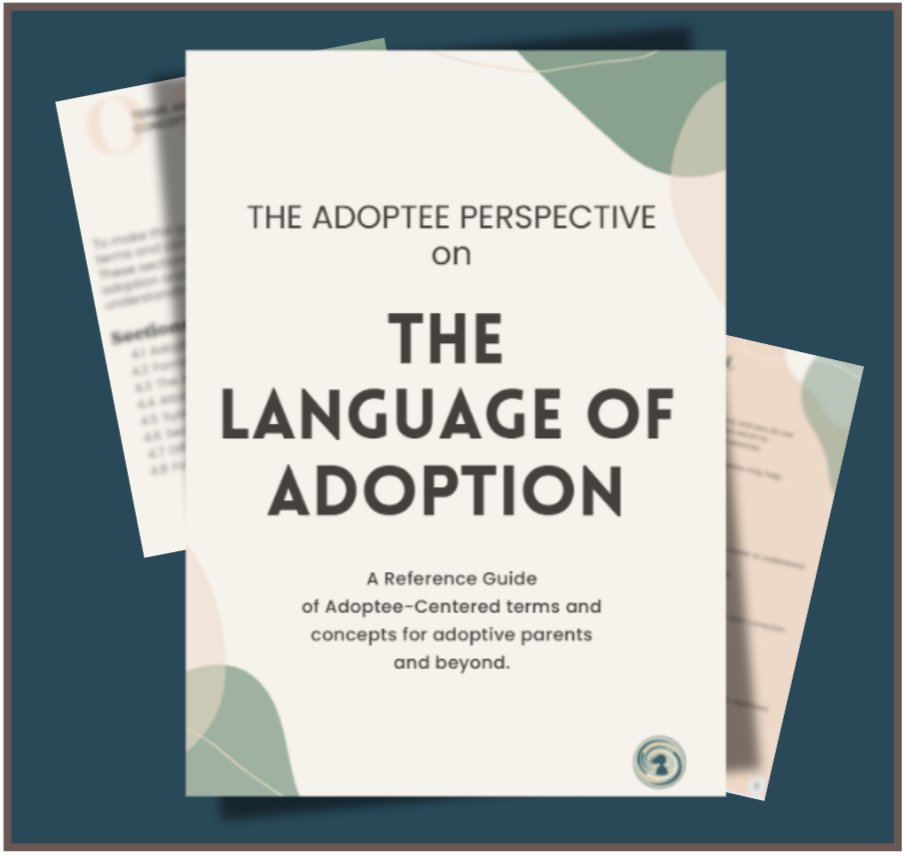 Image 1 of 1